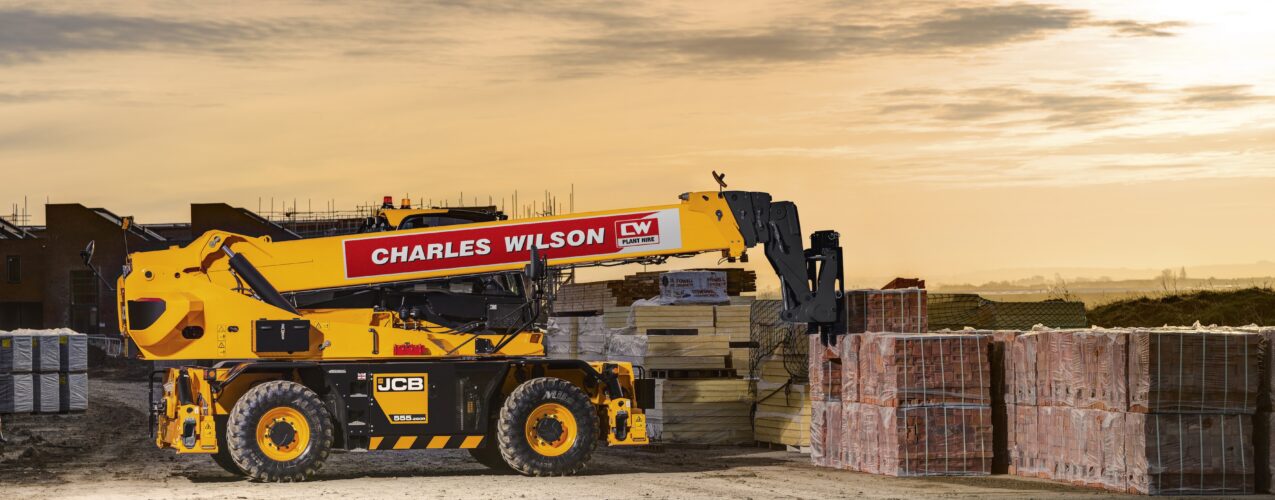
On modern construction sites, efficiency is everything. Space is tight, timelines are tighter, and the demand for versatile equipment has never been higher. That is where a roto telehandler – also known as a 360° telehandler – comes into its own. Combining the capabilities of a telehandler, crane, and access platform in one machine, a roto telehandler offers a smarter, more flexible way to get the job done.
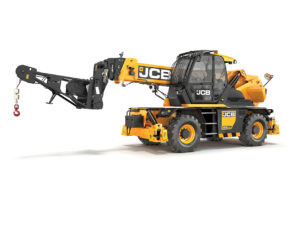
At CW Plant Hire, we operate a nationwide fleet of modern 360° telehandlers from 26 depots across the UK, with strong coverage across London and the South-East. Our machines of choice are the JCB 555-210R and the larger JCB 555-260R – two of the most capable and reliable models available, both equipped with remote control operation as standard.
What is a Roto or 360° Telehandler?
A roto telehandler is designed with a rotating upper structure that allows operators to lift, move, and place loads in any direction without repositioning the machine. Unlike a conventional telehandler, the 360° rotation means a single set-up can serve multiple work faces on a site – dramatically reducing machine movements and improving productivity. This added flexibility makes it ideal for busy, restricted, or complex sites where traditional equipment would require multiple set-ups or separate machines.
1. Telehandler: Reach Further, Work Smarter
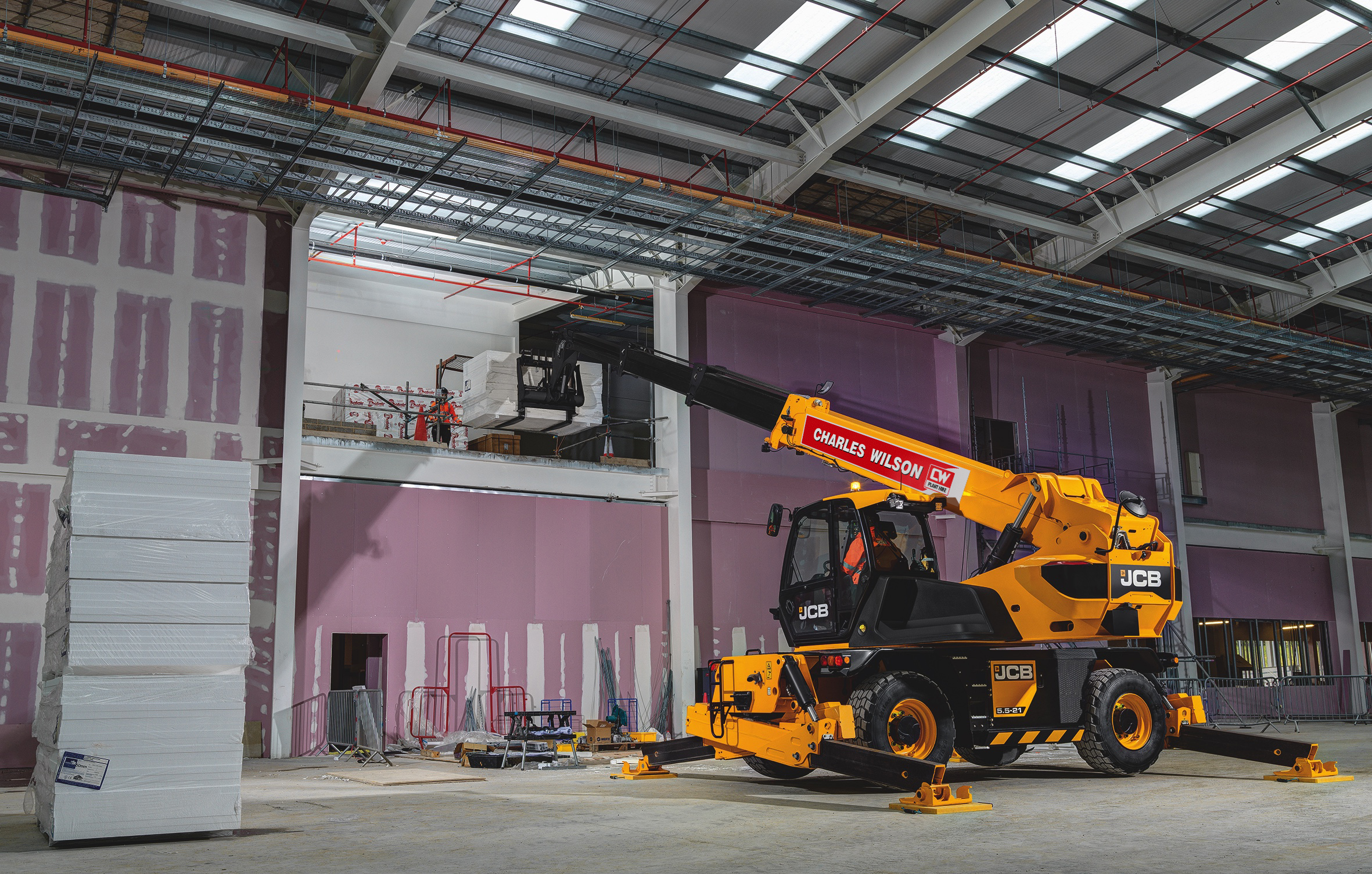
At its core, a roto telehandler performs all the tasks of a standard telehandler – but with significantly greater efficiency. The JCB 555-210R offers a maximum lift height of 21 metres, while the 555-260R extends that to 26 metres, making both machines well suited to multi-storey construction, large-scale groundworks, and complex commercial projects.
With full 360° rotation, materials can be placed precisely where they are needed without constant repositioning. The remote-control system takes this a step further, allowing the operator to move away from the cab and guide the machine from the ideal vantage point – particularly useful when visibility from the seat is restricted. The result is faster, more accurate material handling with fewer errors and less wasted time.
Key benefits:
- Fewer machine movements on site
- Faster, more accurate material handling
- Remote control operation for improved visibility and precision
- Extended reach with the JCB 555-210R and 555-260R
2. Crane: Lift and Place with Precision
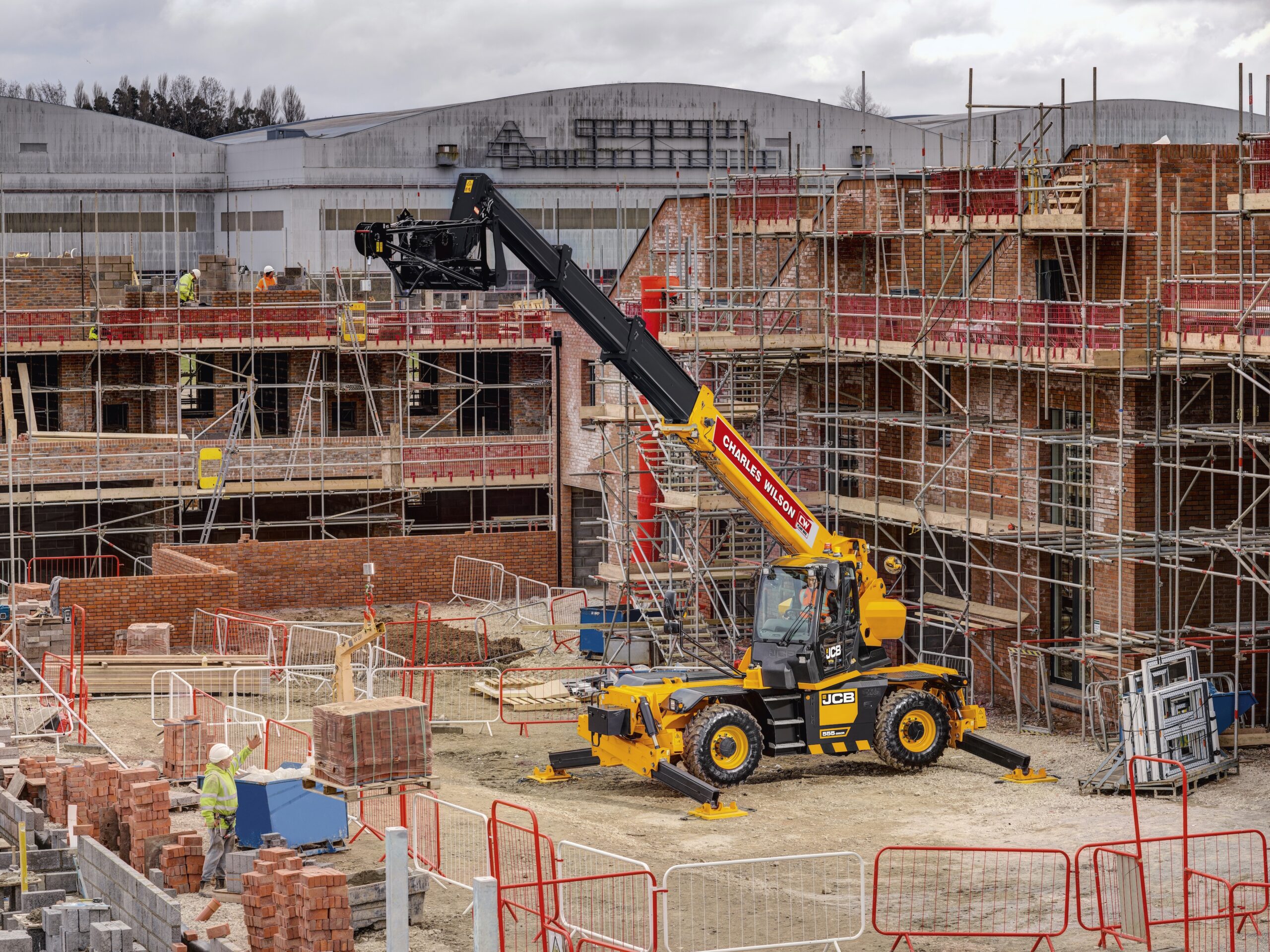
With the addition of a winch attachment, a 360° telehandler transforms into a compact mobile crane. This allows operators to lift loads vertically and position them accurately at height – ideal for steelwork, roofing, or placing materials in hard-to-reach areas. Think of a tight urban residential development where there is no room to mobilise a traditional crane: a roto telehandler can be set up quickly, work from a single position, and repositioned in minutes.
The remote control function is particularly valuable here. On complex or confined lifts, the operator can stand directly at the pick or landing zone, with a clear line of sight to both the load and the placement point. This eliminates the communication delays and risks that come with directing a lift from a cab at distance, and in many cases removes the need for a dedicated banksman, streamlining the crew required on site.
Key benefits:
- Precise vertical lifting and placement at height
- Remote control operation for safe, single-operator lifts
- Reduced need for separate crane hire
- Quick repositioning on confined or complex sites
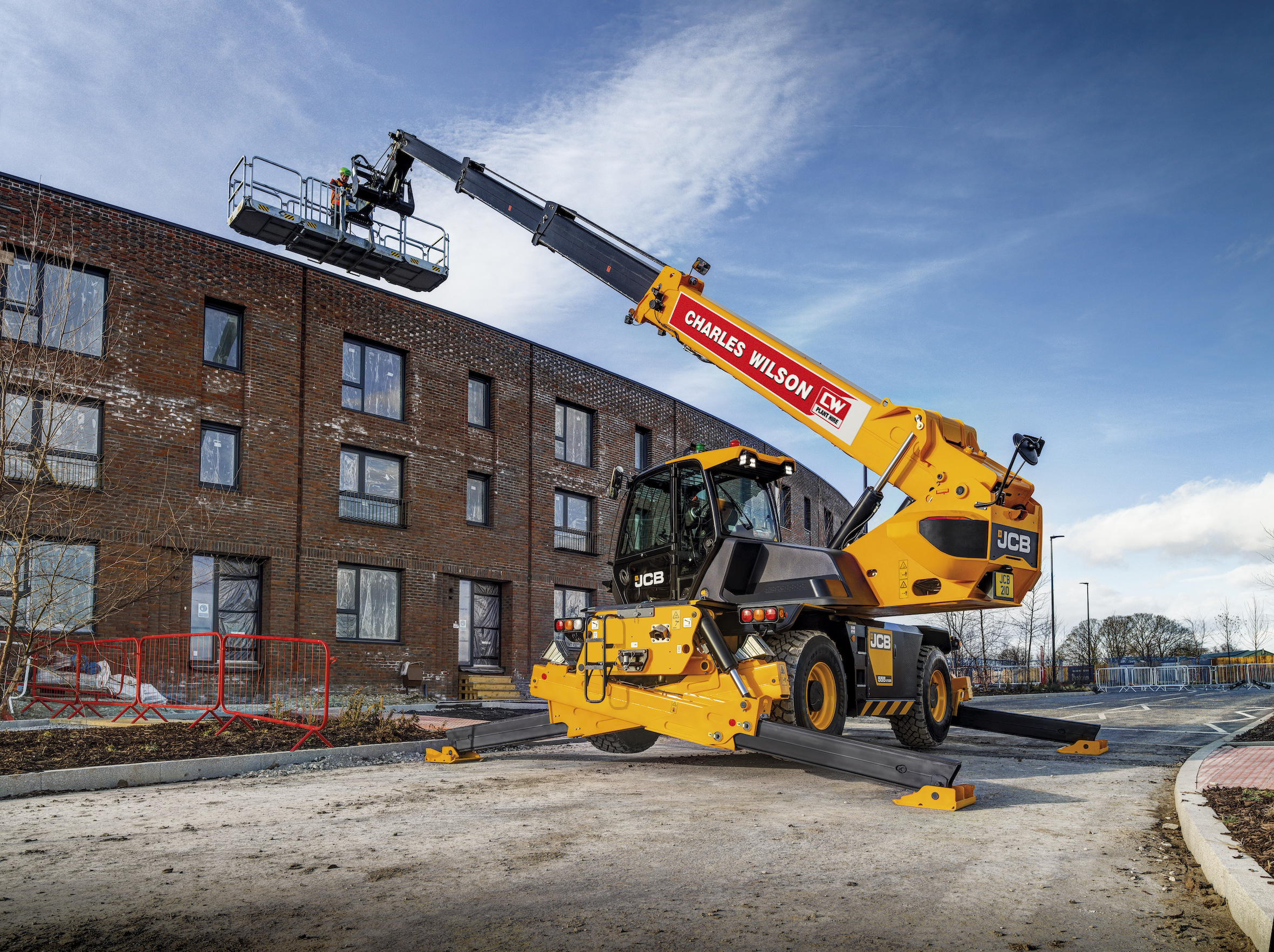
3. Access Platform: Safe Working at Height
Fitted with a man basket, a roto telehandler becomes a capable mobile access platform – perfect for installation, maintenance, inspection, or finishing work at height, all from the same base machine. The smooth hydraulic controls of the JCB 555 series make positioning comfortable and predictable, reducing operator fatigue on longer tasks.
One of the most practical advantages here is the remote control capability. When a person is working in the basket, they can operate the machine themselves from the platform controls, independently positioning themselves exactly where the work demands – without relying on an operator in the cab or shouting instructions across a noisy site. This improves both safety and efficiency, and is particularly useful for tasks such as façade inspections, cladding installation, or roof-level maintenance.
Key benefits:
- Operator-controlled positioning from the basket via remote control
- Multi-purpose access from a single hired machine
- Smooth, stable operation with the JCB 555-210R and 555-260R
- Safe and precise working at height across a range of applications
Remote Control Operation: A Game-Changer on Site
Both the JCB 555-210R and 555-260R in the CW Plant Hire fleet are equipped with remote control operation – and it is worth taking a moment to consider just how much difference this makes in practice.
Traditional telehandler operation confines the operator to the cab, often at a distance from where the action is happening. Remote control changes that entirely. The operator can position themselves at the point of pick, at the landing zone on an upper floor, or wherever visibility is best – and control the machine precisely from there. On cluttered urban sites, this can be the difference between a lift that takes 20 minutes of back-and-forth communication and one that is completed cleanly in five.
From a safety perspective, remote operation also reduces the reliance on hand signals and radio communication between an operator and a banksman, which are common sources of misunderstanding on busy sites. With the operator in direct visual control from the optimal position, the risk of load swing, mis-placement, or collision is significantly reduced.
For access work, the person in the man basket can control their own positioning with the precision needed for detailed tasks – no waiting, no miscommunication, no wasted movement. It is a capability that experienced site managers increasingly recognise as not just a convenience, but a genuine operational and safety advantage.
Why Choose a Roto Telehandler from CW Plant Hire?
The real advantage of a roto telehandler is its ability to replace multiple machines with one. Instead of coordinating the hire, delivery, and operation of a telehandler, a crane, and an access platform separately – each with its own logistics, cost, and site footprint – a single 360° machine handles all three roles.
With 26 depots nationwide and dense coverage across London and the South East, CW Plant Hire can support projects of all scales and locations with fast, reliable delivery. Our specialist depot at Hayes also serves the film and media industry, where the precision, flexibility, and quiet efficiency of a remotely operated roto telehandler make it an increasingly popular choice on production sites.
The benefits of consolidating to a single machine include:
- Lower overall hire costs – one machine instead of three
- Reduced transport, logistics, and site congestion
- Less plant on site – freeing up space and simplifying site management
- Increased productivity through faster set-up and greater operational flexibility
- Nationwide coverage from 26 CW Plant Hire depots
A Smarter Way to Work
Whether you are working on a tight urban plot, a large-scale commercial build, or a specialist media production, a roto telehandler gives you the flexibility to adapt to changing demands without changing machines. The JCB 555-210R and 555-260R, available from CW Plant Hire’s nationwide network, are ready to take on lifting, placing, and access tasks with the precision and reliability that modern sites demand.
To discuss your requirements or arrange a hire, get in touch with your nearest CW Plant Hire depot.
360° capability. Zero compromise.